

Origami is more than an art form. It is a philosophy captured in the fold. Turning a fragile square into a perfect shape without a single cut is a metaphor for overcoming limitations, an alchemy of creativity available to everyone. Today, when we collect a crane, we rarely think that we are holding in our hands a centuries-old story that has gone from a sacred ritual to mathematical formulas and engineering solutions that change the world.
🌱 Origins: Paper, Spirits, and Samurai (pre-1600s)
The roots of origami (ori - to fold, kami - paper) are inextricably linked with the appearance of washi paper in Japan in the VI-VII centuries, which came from China through Korea. Unlike Chinese, Japanese washi, made from the fibers of gampi, mitsumata, or kozo bark, was incredibly strong, flexible, and durable, ideal for intricate folding.
Read also: Origami robots. How do paper models inspire engineers?
Originally origami, or orikata (folded shapes), was the prerogative of nobility and was used in strict Shinto and Buddhist ceremonies. Paper figures served as a symbol of connection with kami (spirits). They were used to decorate offerings, and folded butterflies were used to mark the bride and groom at weddings, a tradition that is still alive today.
With the emergence of the samurai class, origami expanded beyond the temples. Samurai used elegantly folded paper noshi-ori as a sign of good luck and favor, accompanying gifts with them. The tradition of senbazuru (thousand cranes) - collective creation of cranes for good luck - was born. This period laid down the main principle: origami as pure folding, without cuts or glue, where each shape carried a symbolic meaning.

🎎 Evolution: From Craft to Folk Art (1600-1945)
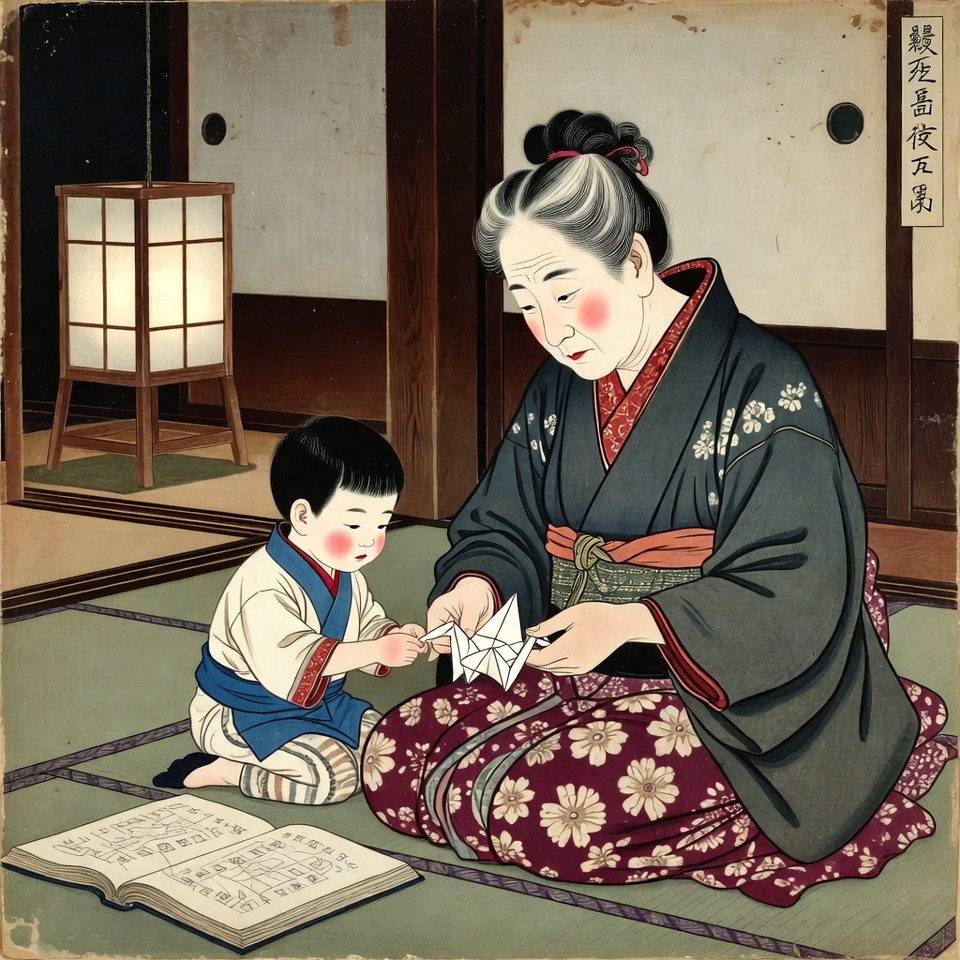
The Edo era (1603-1868) was a turning point. With the spread of washi, origami became a popular family and folk pastime. The first printed instructions appeared, such as the book by Sembazuru Orikata (1797), devoted exclusively to crane folding. The shapes became more complex and varied: frogs, ships, and kabuto helmets worn by boys on Children's Day.
It was then, in 1845, that Kan-no-mado was published, the first complete collection of origami models, considered an encyclopedia of traditional forms. Art was passed down from generation to generation, becoming part of Japan's cultural code. However, it remained more of a craft based on a set of known forms than a free creation.
Read also: The history of paper - from antiquity to the present day
🚀 Revolution: The Birth of Modern Creative Origami (from the 1950s)
The real revolution was made by one man, Akira Yoshizawa. (1911-2005). He transformed origami from a folk craft to a high art. His ingenious innovations changed everything:
- Symbol system (lines, arrows), which has become the international language of origami diagrams.
- Wet folding technique - by slightly wetting the paper, he gave the figures smooth, sculptural shapes.
- Creativity Principle: He viewed each model as a unique artistic expression rather than a repetition of a canon.
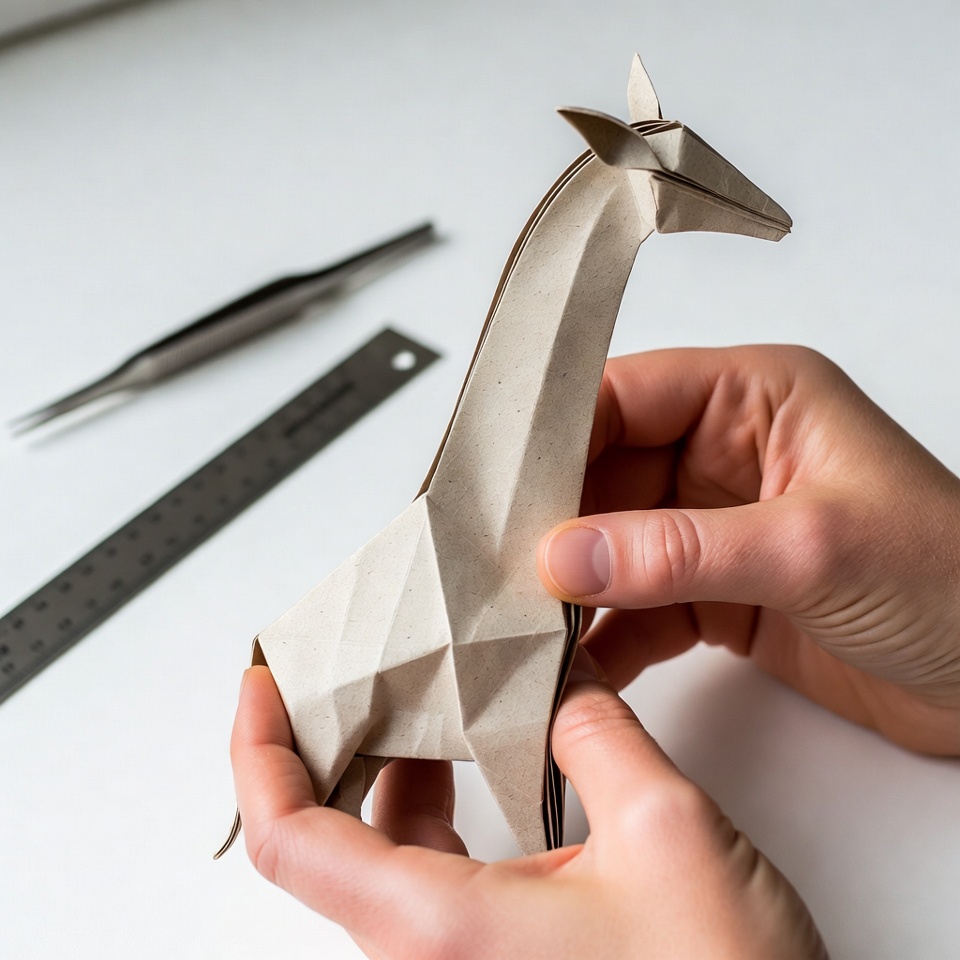
Yoshizawa created thousands of new, incredibly complex and lively models. In parallel, in the West, particularly in the United States, such masters as Robert Harbin (popularized through television programs) and Robert Lang, a mathematician and physicist, picked up the baton. Lang, using algorithms and computer-aided design, developed models of unimaginable complexity, from insects with hundreds of legs to figures composed of a single sheet of paper without gluing. Origami has entered a new dimension where art, math and engineering meet.
🌍 Globalization and Synthesis: Origami in Science, Medicine and Space
In the second half of the 20th century, origami ceased to be an exclusively Japanese phenomenon, becoming a global language of creativity. National associations are created all over the world, conferences and exhibitions are held.
But the true breakthrough came when scientists saw origami not as an art form but as an advanced engineering methodology. The principles of compact packaging and deployment of a flat sheet into a complex 3D structure have found applications in the most unexpected areas:
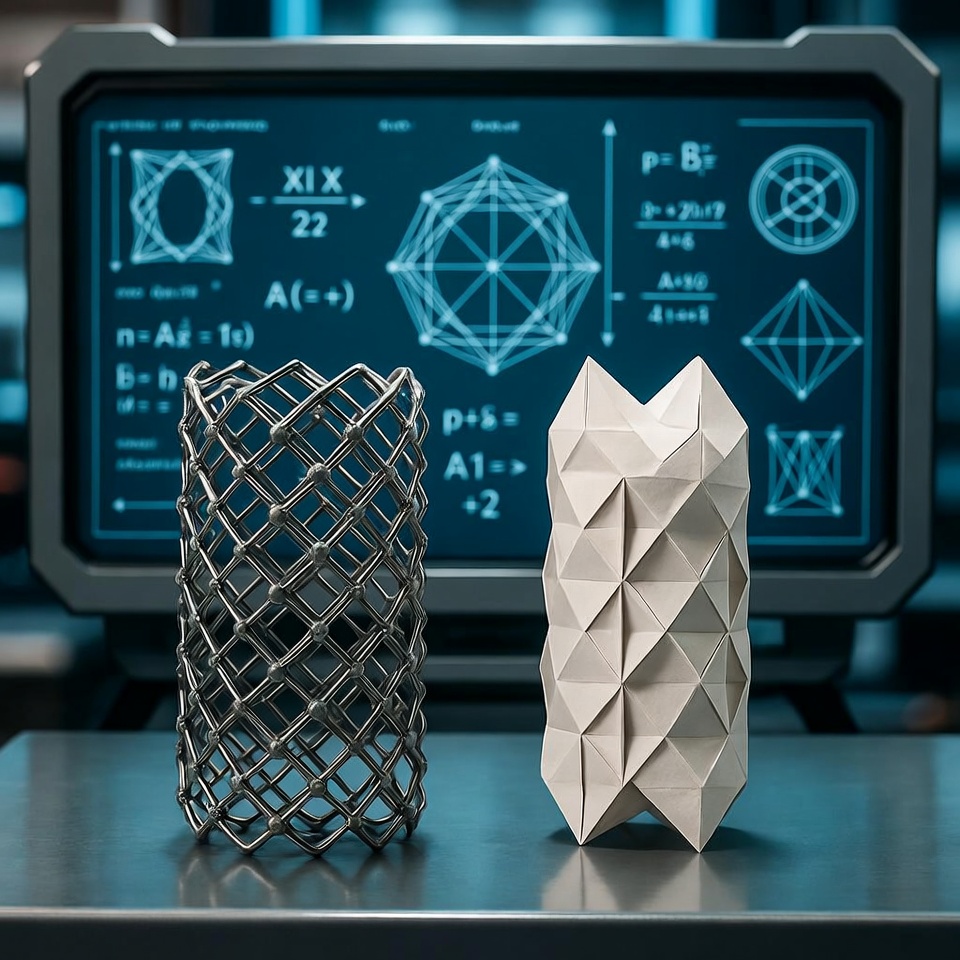
- Medicine: Arterial stents and implants that are inserted into the body when folded and opened in the right place.
- Aerospace Engineering: Solar panel satellites that, like origami, fold compactly for launch and unfold in orbit.
- Robotics: Self-assembling robots and materials with programmable properties (origami materials).
- Architecture: Transformable building facades and emergency shelters.
Today, mathematicians explore the theory of rigid origami, calculating how any polyhedral shape can be folded. Origami has become a bridge between humanitarian and exact knowledge, between ancient aesthetics and futuristic technologies.
💫 Conclusion: The eternal present of paper art
The history of origami is a history of dialog. A dialog between tradition and innovation, between the intuition of the artisan and the calculation of the scientist, between a national symbol and a universal language. From Shinto altars to Martian rovers, the paper crane has traveled a path that its creators never dreamed of.
Read also: How do you make an airplane out of a bill?
It reminds us that even in the digital age, the potential of a simple sheet of paper is limitless. When we fold a figure, we don't just follow instructions - we connect to the living stream of history, where each generation adds its own fold, revealing new facets of an ancient but ever-young art. Origami no longer belongs to Japan alone - it belongs to the future, which we continue to fold with our own hands.







 English
  Русский
  Українська
  Français
  Italiano
  Español
  Deutsch
  Čeština
  Polski
  Български
  Português do Brasil
  Bahasa Indonesia
  Türkçe
  العربية
