

Decoupage is an art in which ordinary paper is transformed into an exquisite imitation of painting, inlay or art painting. The word itself comes from the French word découper - to cut out. Today we know decoupage as an accessible technique of decorating with napkins, but behind this hobby there is an amazing history, full of traveling across continents, cultural borrowings and ingenuity of masters of different eras. Let's trace the evolution of paper decorating - from Siberian mounds to Parisian salons and modern design studios.
🗿 Mysteries of origin: Siberian origins and Chinese lanterns
Surprisingly, the most likely place of origin of the decoupage-like technique is considered to be Eastern Siberia. Nomadic tribes used felt figures carved from felt to decorate the funerary structures of their dead kin. These were not just decorative elements, but ritual symbols that accompanied a person to the afterlife.
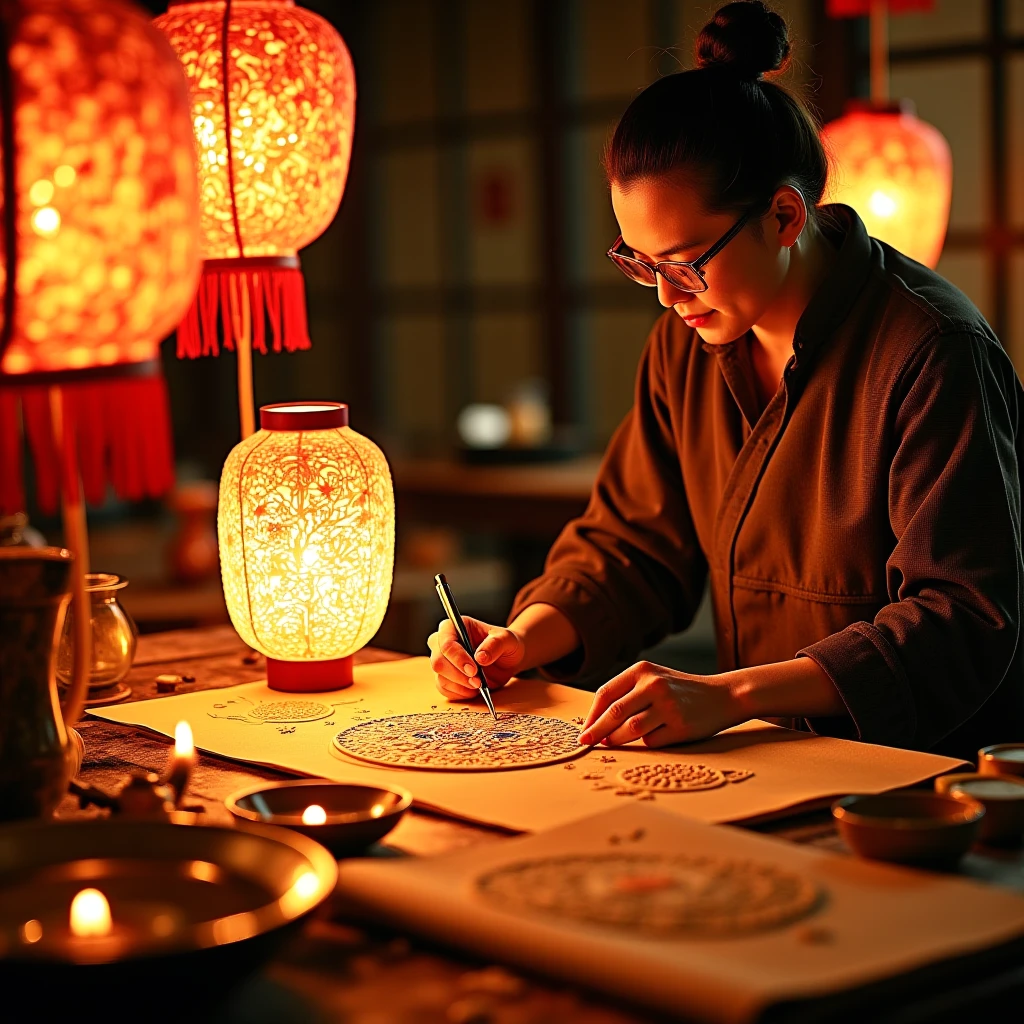
The practice moved from Siberia to China, the country that gave the world paper. It was in China, around the 12th century, that cut-out paper pictures began to be used to decorate quite mundane objects: lanterns, windows, caskets. Chinese peasants, who created thin colorful paper, were the first to use it to decorate everyday things, laying the foundation for the future art . Thus was born a tradition that was to conquer the world.
🇮🇹 The Venetian Miracle: How the East Conquered Europe
The real breakthrough in the history of decoupage took place in the 17th century in Venice. This city was the gateway through which the flow of oriental goods - fine porcelain, lacquer boxes, painted screens from China and Japan - poured into Europe. European nobility was fascinated by chinoiserie, the Chinese style. But only a few could afford authentic Oriental masterpieces.
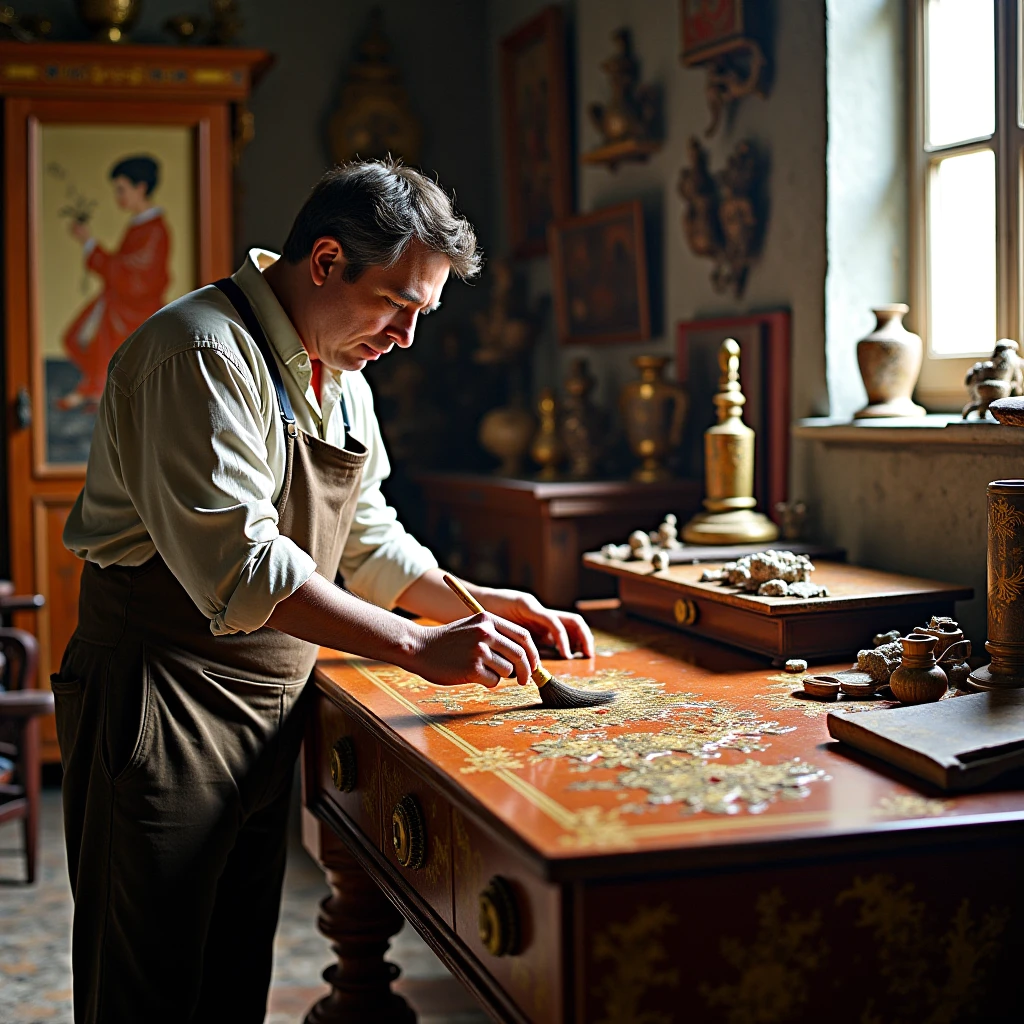
This is where the ingenious ingenuity of Venetian furniture makers came into play. They began to skillfully cut out images from paper (often using engravings by famous artists), glue them onto the surface of furniture, and then cover them with... 30-40 layers of varnish! Each layer was carefully dried and sanded. As a result, the paper application acquired an illusory depth and became virtually indistinguishable from a real expensive inlay or painting.
This technique is known in Italy as arte povera - the art of the poor. Ironically, today, the very furniture once created as an affordable imitation has itself become extremely rare and worth fabulous sums of money, being the subject of collectors' hunts and the object of imitation for modern designers.
👑 Royal fun: Decoupage at the French Court
From Italy, the art migrated to France, where it experienced its "golden age". Decoupage became especially popular at the court of King Louis XVI. Queen Marie Antoinette herself and her court ladies were fond of cutting out pictures and decorating furniture and accessories with them. The works of famous artists such as Watteau, Fragonard and Boucher were used. The paintings of the great masters were cut into fragments and pasted on boxes, screens and panels (many of these works, unfortunately, were lost during the French Revolution).
Around the same time an important artistic branch of decoupage technique appeared - découpure (French: découpure). This technique consisted in the multiple repetition of the same element, its mirror reflection or symmetrical doubling to create complex ornaments and deceptions. The famous French furniture maker André-Charles Boulle used this principle, combining copper, tortoiseshell and mother-of-pearl in his inlays.
🇬🇧 Victorian England and the Conquest of America
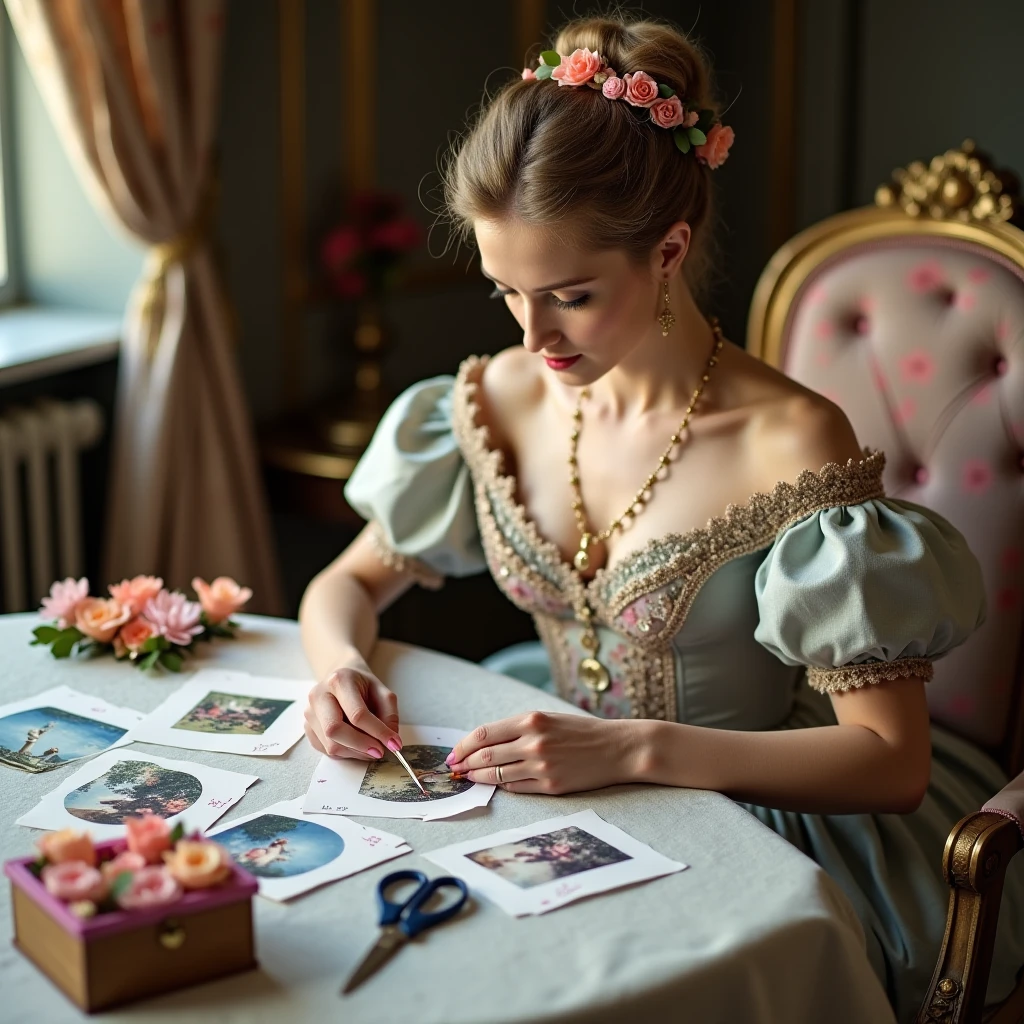
The next major stage of evolution occurred in Victorian England in the nineteenth century. Thanks to the development of printing, affordable collections with printed sheets for cutting became available. Decoupage ceased to be an elitist pastime and penetrated almost every home. The Victorians loved sentimental subjects: flowers, angels, pastoral scenes. They decorated everything from screens and trays to photo albums.
From England, the fashion for decoupage crossed the ocean and conquered America. It was especially widespread between World Wars I and II. In the 20th century, the great artists Pablo Picasso and Henri Matisse drew attention to the expressiveness of cut-out paper shapes. Matisse created a whole series of famous decoupages (cut out of gouache-colored paper), the most famous of which is Blue Nude.
🖼️ Modern Renaissance: Napkins, printers and new possibilities
In the late XX - early XXI century decoupage experienced a tremendous revival, becoming one of the most popular hobbies in the world, including Russia . What has changed?
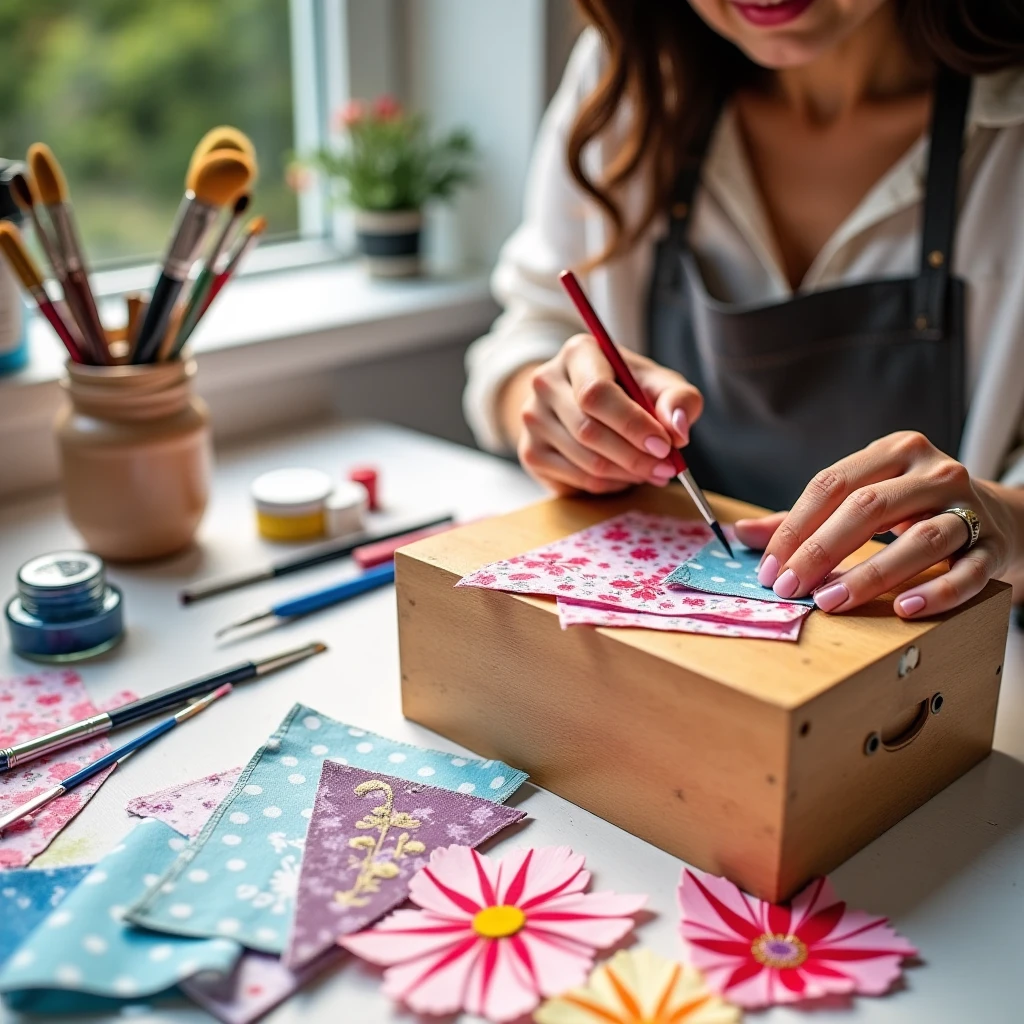
- Materials: Special three-layer napkins with colorful drawings appeared, which gave the technique its second name - napkin technique. Today masters also use decoupage cards, rice paper, printouts on a printer.
- Surfaces: You can glue to almost anything - wood, glass, ceramic, metal, fabric, candles, plastic.
- Techniques: To the classic decoupage were added volumetric (with the use of structural paste), artistic (with additional drawing of the background), reverse (for transparent surfaces), decopatch (pasting with pieces of paper).
- Styles: Modern decoupage actively uses the stylistics of interior trends - Provence, shebby-chic, Victorian style, country, ethno.
Today decoupage is not just a hobby, but a full-fledged tool for interior design and creating exclusive accessories. With its help, old furniture is transformed into designer art objects, and ordinary bottles and caskets into works of art.
💫 Impact on the arts and global traditions
Decoupage is unique in that it has organically absorbed the cultural codes of different countries:
- The East gave aesthetics and love for natural motifs.
- Italy added lacquer craftsmanship and volume.
- France brought grace, lightness and courtly glamour.
- England democratized art and infused it with domesticity.
- The 20th century turned decoupage into a tool of great art (Matisse).
This technique proved that paper is not just a fragile material, but a carrier of endless creative energy. From Siberian mounds to Parisian salons, from "the art of the poor" to high design - decoupage has traveled an amazing path, while remaining accessible to everyone who wants to touch the beautiful. You can try it too! ✨






 English
  Русский
  Українська
  Français
  Italiano
  Español
  Deutsch
  Čeština
  Polski
  Български
  Português do Brasil
  Bahasa Indonesia
  Türkçe
  العربية
