
Origami, often perceived as a strictly Japanese art, has long since crossed national boundaries, becoming part of the cultural code of different nations. In each country, it has found its own unique meaning, adapting to local traditions and needs. This journey of the flat square around the world is a story of how the universal language of folding speaks in different dialects, while preserving its deep essence: the transformation of the simple into the beautiful.
🇯🇵 Japan: Where Paper Finds Its Soul
In Japan, origami is not just a craft, but a cultural and spiritual phenomenon rooted in Shinto beliefs, where paper (kami) is the link to the deities (kami). Here, every fold is full of symbolism.
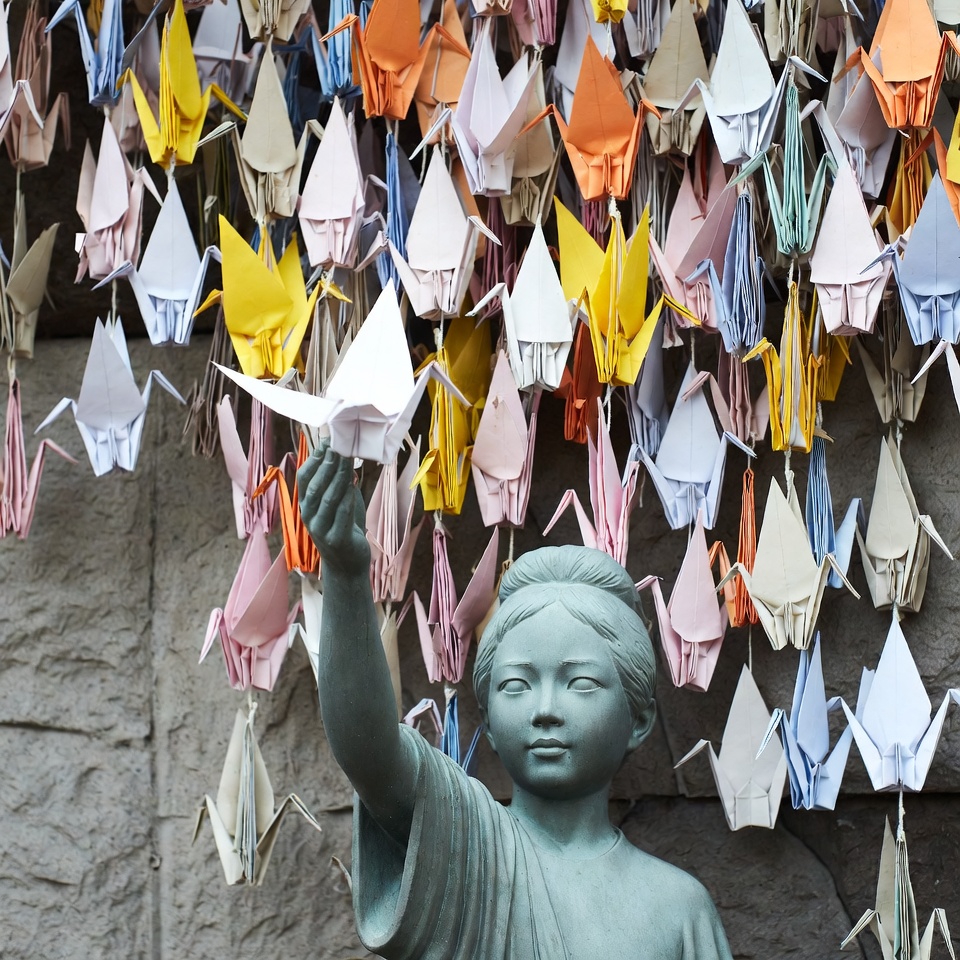
- Crane Tsuru: A major cultural symbol. It represents longevity, good luck and loyalty. Legend has it that the crane lives for a thousand years, and the one who folds a senbazura (a thousand cranes) will find healing or fulfillment of a cherished wish. 🏮 The tragic story of Hiroshima survivor Sadako Sasaki has turned the paper crane into a global symbol of peace, hope and remembrance, taking its significance far beyond Japan.
- Noshi-ori and Tsutsumi: The tradition of decorating gifts with folded paper figures (meibo) or using origami as ceremonial wrappers for precious objects, emphasizes respect for the gift and the recipient.
- Educational and family role: С of antiquity, origami is part of aesthetic and intellectual education. Folding with grandma or in school lessons imparts not only skill, but also the values of patience, precision and harmony.
🇨🇳 China: The Progenitor of Paper and Its Ways
Although paper was invented in China (Cai Lun, 105 AD), traditional Chinese folding took a different path. Here it was closely associated with funerary and ritual practices. The burning of paper figurines-symbols of wealth (money, houses, horses) was intended to ensure the well-being of the deceased in the afterlife.
- Zihaji: The Chinese art of folding, often involving cutting and gluing, was more utilitarian. The creation of boats, hats, or decorative boxes did not carry the same philosophical and symbolic connotation as in Japan. Modern Chinese interest in origami is in many ways a reimport of the already Japanese and Western interpretations of origami, but with a continued love of complex, often modular, compositions symbolizing unity and abundance.
🇪🇺 Europe: From Salon Fun to Mathematical Abstraction
To Europe, the basic principles of folding probably came along the Silk Road and through the Arab territories, where the geometric tradition developed. Here origami has long remained a curio and a social pastime.
- Spanish Pajarita: One of the oldest European traditions is the folding of a paper bird (paharita), which, according to some data, existed even before active contacts with Japan. This indicates a possible parallel independent development.
- Froebel's Pedagogy: In the 19th century, German educator Friedrich Froebel, the founder of kindergartens, incorporated paper folding into his educational system as a tool for developing spatial thinking, motor skills and an understanding of geometry. This laid the foundation for the perception of origami in Western Europe as a developmental activity for children.
- A scientific view: Europeans, in particular such masters as the Englishman John Smith, in the XX century began to view origami through the prism of mathematics and abstract geometry, giving rise to the direction of pure origami without excessive symbolism.
🇺🇸 United States and the Modern West: Therapy, Science, and Pop Culture
Origami came to the United States after World War II and experienced a boom, transformed by the local culture of pragmatism and innovation.
- Art therapy and rehabilitation: American specialists were among the first to massively introduce origami into psychological and physical therapy. The monotonous, concentration-demanding process of folding helps reduce anxiety, develop cognitive functions in the elderly and restore fine motor skills after injuries. It is meditation in motion.
- Origami in STEM: The U.S. has become a leader in integrating origami into science, technology, engineering and math (STEM). American scientists and engineers such as Robert Lang are developing solar panels for satellites, stents for arteries, and folding robotics based on origami principles. Here, paper is the prototype for revolutionary technologies.
- Pop culture and democratization: Origami in America has become as democratic as possible. It is a hobby for everyone, a decorative element, a theme for Hollywood movies (for example, Blade Runner 2049). Modular origami and author's art objects, where aesthetic statement rather than symbolism is important, have become popular.
🌐 Global Value: Universal Bridge
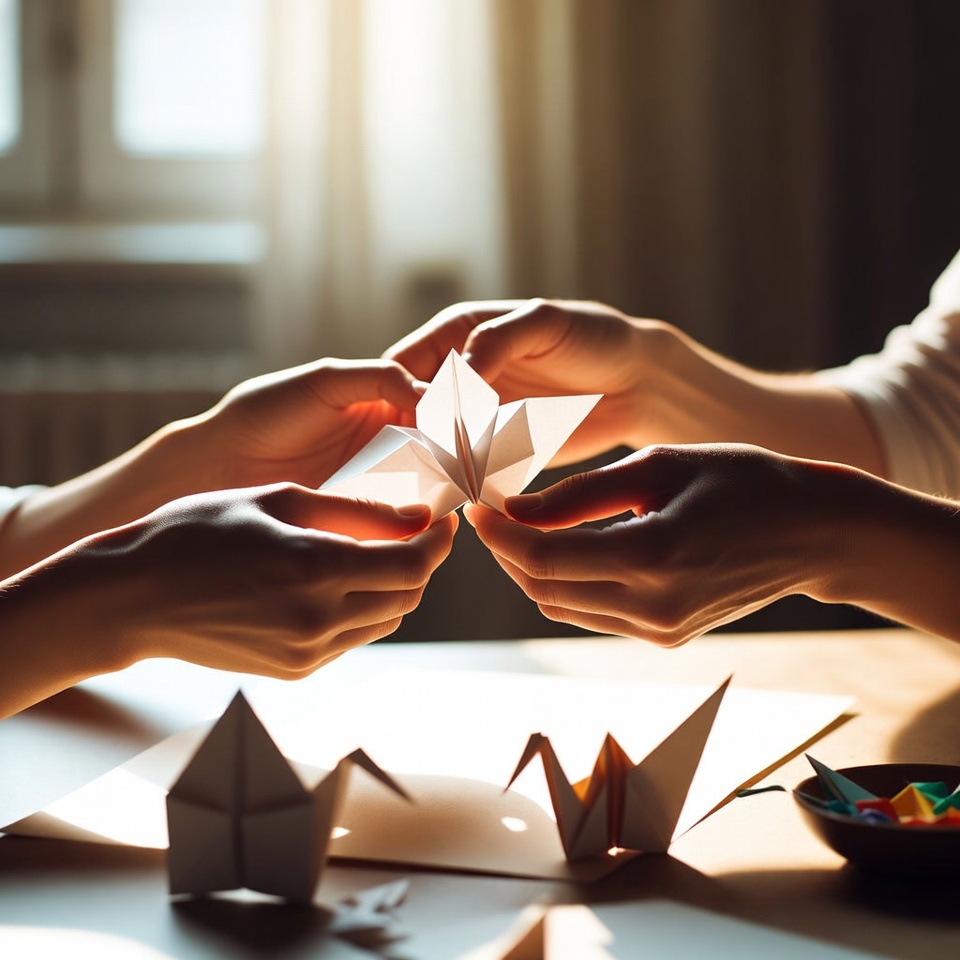
Today, origami serves as a cultural bridge. It brings people together regardless of language, age or background in workshops, international conventions and online communities.
- General Symbolism: Some forms have become international: crane - peace, frog - wealth, airplane - dream. 💝
- A tool for inclusion: Its accessibility (you only need paper) makes it a powerful tool for inclusive creativity and education around the world.
Conclusion. The cultural meaning of origami is like paper itself: it can take on any form, blending into the local context. In Japan, it is a deep connection to tradition and spirit; in the West, it is a tool for innovation and therapy. But at its core, it is always the same: the miracle of transformation that is available to everyone. Having gone from sacred ritual to space technology and psychological practices, origami has proven that it is not just the art of paper folding. It is the art of folding the meanings that each nation puts into it in its own way, creating a single, multifaceted picture of the world's cultural heritage.







 English
  Русский
  Українська
  Français
  Italiano
  Español
  Deutsch
  Čeština
  Polski
  Български
  Português do Brasil
  Bahasa Indonesia
  Türkçe
  العربية
